Lucy - Photojournalism Research Modes, styles, visual signatures, research into particular documentary and photo/video journalism practitioners and reviews of photo/video journalism practitioners that may influence our documentary in regards to their modes and styles, and have also influenced the way my photo essay was put across. Bill Nichols has stated that "in documentary film, four modes of representation stand out as the dominant organizational patterns around which most texts are structured: expository, observational, interactive and reflexive"1. However, alongside these are other documentary modes: |
||||
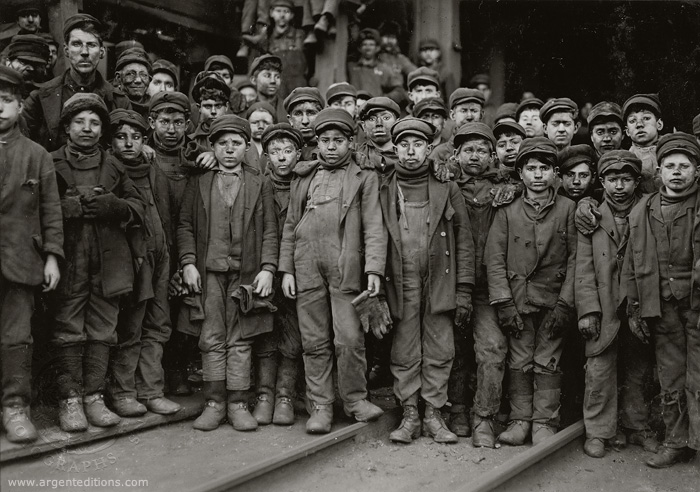
Photojournalism Practitioners Dorothea Lange 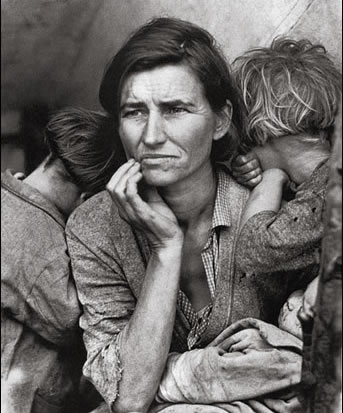 Dorothea Lange and her image of the 'Migrant Mother' (right) is a popular example of the way an image can change people's opinions. Her photograph was so influential it actually hit home to people that the Depression was happening to hard-working people 'down on their luck'. It evokes empathy from the spectator because they interact with the main subject - the mother but also question the identification of the children, and why they may be facing away from the camera instead of straight towards it. However, it was a popular image during the time, and has been known to change people's opinions, but further research into why the image was so influential has pulled up some opposing results. For example, Lewis Hine was documenting around the same time as Lange, and collectively the documenting community was named the "reform photographers"2. Hine was focusing on the child labour laws, however, and did manage to reform some popular opinions about how bad the ethics of underage children working in confined spaces for long amounts of time. Nevertheless, collectively they were conveying the same message – what society thought was ‘fine’ was not actually everything they thought it was, and the evidence, the photographs, depicted the real-life situations these people were in. Briggs explains that: “Although ‘migrant mother’ was by far the most famous of such photographs, Lange and the other FSA photographers like Russell Lee, Ben Shahn and Jack Delano often chose women, children or Madonna-and-child figures for their subjects, invoking ideologies of rescue, care, and compassion – figuring the federal government as succour to these desperate mothers and children. These images were, and were intended to be, politically inflected documents: they were produced as propaganda for the New Deal relief and food-aid efforts at a time when Republican opponents were calling them ‘communism’, and Roosevelt himself, ‘that man’, and insisting that he was ruining the country”. (Briggs 2003: 183). So, even though ‘migrant mother’ may be one of the more popular images of the time, it was not the only, solo image that changed and ‘reformed’ people’s opinions; it was in fact an array of images that were bombarded onto the public as propaganda to go against the recent political changes, or to try and change the current political problems. The photographers were putting across their views about the government through hard-hitting images that reflected to the spectator so much so that the spectator began to believe in the photographer’s view and change their judgment to an opinion closer to the photographers’ and the view of the opposing political propaganda.
He is labelled as a 'candid photographer', taking images whenever and wherever they occur. This could also be under the observation mode of photography, taking pictures in a less intrusive manner. The photograph taken in V-J Day is said to represent the overall feeling of the end of World War II, the excitement and "celebration the country felt at the war's end". (http://www.encyclopedia.com/topic/Alfred_Eisenstaedt.aspx) It is the reaction to this picture that gave it its fame today, not the event itself. This is important to note because even in Dorothea Lange's photograph of the Migrant Mother, it is also the influence the photograph had on the reader and audience that raised the concerns (in regards to Lange's photograph) and celebrations (in regards to Eisenstaedt's photograph) that led to the images' 'fame'. Both Lange and Eisenstaedt, therefore, have influenced the way I see our documentary forming because they both capture what is happening at the very best moment, without staged actors and staged events, just capturing the 'real' event that is happening before the photographer. I think it would be a good idea, then, that we add in still images to our documentary, to show the audience a specific event or situation. Furthermore, adding a still increases audience awareness of the event being shown to them, which makes them stop and think whilst watching our documentary. So, let's say there was a situation where a real life superhero were helping someone, it would be beneficial to us to get a few still images of this situation and add it among moving images, to 'hit home' to the audience the way the real life superheroes are helping their community. Photo/Video Journalism Research, History and Reviews "With the introduction of digital cameras, photojournalism has greatly augmented its capacity for reporting up-to-the-minute news from around the world. Not limited by exposures on a roll of film, digital chips can store up to a thousand images, and are less sensitive to airport x-rays and exposure to light. With a wireless internet connection, a photojournalist can send images from the field to his or her editor within seconds of their initial capture. As a medium, the digital photograph has opened up new venues for gathering news, from small, self-published newsletters, to the online blog. These new venues mean an increased market and an accelerated pace for the transmission of news through photographic images." (http://www.photography-schools.com/photojournalismhistory.htm) In the news today it is rare to find a news article that is not accompanied by at least one photograph that either backs up what the article explains or adds to the story altogether. It is because of the most recent technology and audience awareness of this technology that the audience expectation has risen. If there were no images alongside an article, it would seem as if the audience were only getting half the story. This expectation stemmed from early 1930's-50's, where photojournalists such as Robert Frank and Alfred Eisenstaedt used their photographs in newspapers like The Daily Mirror to capture and reinforce a recent news article. However, it was also the photographs that they took that captured the 'reality' of the story that was emerging in front of them - the pictures then gave a sense of realism to the reader of the newspaper because they could see for their own eyes what the photographer would be seeing in the event. However, it is due to the portability of the camera that the photographers used that gave them the freedom to capture this still image of reality. It was not until more portable cameras were available and the "introduction of the 35 mm Leica camera in the 1930's [that] made it possible for photographers to move with the action, taking shots of events as they [were] unfolding" (http://www.photography-schools.com/photojournalismhistory.htm). So, it was the importance of capturing the reality of the situation and the technological advancements that photographers took great influence by that caused the audience and reader expectation to receive a news article along with images. At twenty, photojournalist Matt Eich has maturity dropped in his lap: his world-class career takes off, just as his girlfriend becomes pregnant. Together they document their budding lives, as they grapple with some very grown-up choices. See the project at http://mediastorm.com/publication/love-in-the-first-person Love in the First Person Love in the First Person is a photo/video journalism project, documenting two people's lives as they try and live their lives the bestway they can whilst also documenting the lead up and having a baby. References: |
||||